Japan Trip: My Osaka Experience
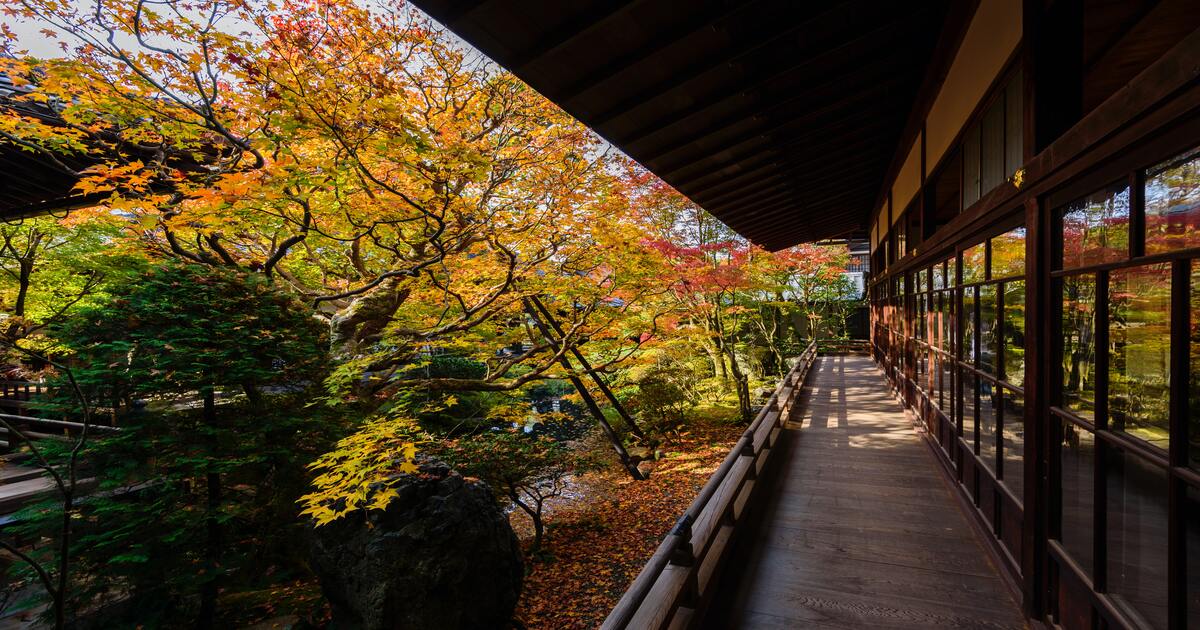
I stayed in Japan for almost two weeks. While most things I saw on the internet were true, I think some of them were wrong. This post will be entirely about my trip to Japan.
I could only visit Osaka, which is a very large city. Knowing that there are many other big cities and regions like this makes the situation quite different. It is very difficult to explore even one city completely or to get to know its museums and local spots. However, you can still experience a lot of its cultural structure.
Since I only visited Osaka, what I write will generally be about this city. I don’t know how accurate it will be for other places, as I think different cities might have their own characteristics. Most of the things I write will be comparisons with Turkey. Since I live in Turkey, I will write based on the things that do not exist in the system I am used to.
The Metro System in Osaka
There are two main train systems in Osaka. One is called Nankai, and the other is the JR (Japan Railways) line. There are also buses, but unfortunately, I didn’t use any of them, so I cannot provide information on that topic.
The name “Nankai” means “South Sea.” It has multiple lines, and all of them stop at specific main locations. This means if your house is near one of these stops, you can take almost any train on that line. There is a specific train that stops at every station, which is called the “Local” train, and its color is gray. Each type of train has a different color and is designed accordingly.
At the same time, there are numbers next to the lines. A person with hearing impairment can distinguish which train to take by looking at the colors. Also, for visually impaired people, Braille is available almost everywhere. If you encounter a problem, the staff will help you in the best way possible.
For me, the JR Line was much more complicated. Unlike Nankai, it always splits into different directions around Osaka. To put it simply, if you know how to make transfers, you will usually find yourself doing this on the JR Line. Again, the stations and paths are surrounded by colors and numbers for guidance.
Besides that, almost all stations intersect at more than two points. Since I have a little bit of Japanese knowledge, I could distinguish the stations by listening to the sounds. However, I know that many tourists might get confused because some stations start with the same sound even though they are different places.
For example, the first thing you should check on maps is whether you are starting your journey with the JR Line or Nankai. Stations like Haginochaya and Hanazonocho are very close to each other but are considered different stops. This can be confusing because not only are the lines different (Nankai vs. JR Line), but the station entrances are also in different locations. They aren’t even in the same spot! If you don’t check the map and only rely on the similar sounds of the names, you might end up at the wrong station.
When buying a ticket, you need to select your destination on the machine, and the price is calculated accordingly. However, in some areas, if you cannot read the characters, it might be hard to find information about where to get off. For instance, on some machines, you just say “I want a 220 yen ticket” and you can leave at any station that costs 220 yen. Some machines show the station names directly, while others specify that stops within a certain distance are 180 yen. You can buy tickets for up to four people at once; there are many options from “child” to “family” tickets.
One challenge is if you live near a local train station. You might have to wait a long time for a local train. If you don’t know the schedule and you are within walking distance of a main station, it is more logical to walk there. Alternatively, you can take a train in the opposite direction to a larger hub where all trains stop, and then catch a faster train in your actual direction. Waiting for the local train is often not the smartest move.
Additionally, metro stations have multiple exit gates. You can see this easily when you are there. Also, Google Maps even tells you which carriage (vagon) you should be in to reach your destination faster. I witnessed people changing carriages just to get to their exit more quickly. This is very common for Japanese people and is considered completely normal.
While waiting for trains, bird sounds are played through the speakers. I’m not exactly sure why. If I had to guess, I think it’s to give a sense of nature or perhaps to warn birds in a tone they can understand about the station environment.
Lastly, people almost never talk on the metro. I rarely saw a few people talking, but I never saw anyone talking as much as our group did.
A City of Chaos Within Order
There is a huge crowd in the city, especially in tourist areas. I think this situation is likely caused by high purchasing power. People are constantly shopping and can buy many things, yet they somehow manage to remain minimalist. When you move away from the crowded areas, you see calmer and more peaceful neighborhoods. Most houses are built small, and you can see some “old-style” houses—not necessarily broken, but in the traditional style we often see on the internet. Due to modernization, houses have become smaller and are built in multi-story structures close together.
I went to Japan with four people: my sister, her husband, a friend, and myself. My sister and I arrived early and stayed in a hotel. A very annoying thing was that the hotel windows could only be opened downwards, so you couldn’t really open them properly. Since the room was small, there wasn’t enough air to breathe. You already can’t smoke in the room, but sometimes you even have to open the door for five minutes just to get some fresh air, which is ridiculous.
In the city, you walk to most places and can see many things. Even if you don’t understand the writing, there is usually English available, or symbols emphasize what you can do inside. While the main roads are wide and comfortable, the narrow side streets can sometimes be very cramped. Additionally, many people don’t seem to know how to walk efficiently. They walk very slowly in some parts of the road, which creates a “wave effect” like a car braking suddenly in traffic. This happens in my country too, but considering the crowd is three times larger here, walking slowly feels different. In Japan, I think people walk this way because they are not in a hurry.
Most of the cars are electric; in fact, almost all of them. When cars pass by, they make no sound. Even cyclists are silent and can pass so close that they almost hit you. Some ring their bells, but they are few.
I believe the “smell habits” are one of the biggest problems. There are smoking rooms in most areas, which is fine. The real issue is other smells—usually not human smells, but food or grease. Sometimes you suddenly smell sewage, and it’s completely random. One moment you smell hot oil, then sweet pastries, then sewage, then fish… it can destroy your sense of smell. It’s like “nose torture.” The locals are so used to it that a place can smell terrible, but people keep eating and having fun as if everything is normal. Even without open windows or air conditioning, the smell of grease sticks to your body and won’t leave, even after a shower.
In busy areas, neon signs and advertisements are everywhere. You can’t escape them. Since you don’t understand the language, you get extremely curious about what they say.
Markets and Technology
Whether they are small convenience stores or large supermarkets, all of them sell a wide variety of products. When you enter a market, you can usually find everything you need. In some places, the pharmacy section is separated but located within the same building. Briefly, the pharmacy and the market are different sections, but they stay under one roof.
If you want to eat, they have freshly prepared meals. A few chefs prepare food in the back and put it out front. When a dish is sold, they immediately start preparing a new one. There were so many different products that I couldn’t try them all, but they all tasted like home-cooked meals. It is very obvious that these are prepared for people who cannot cook at home or for those who don’t have time and want to grab something on their way to work. Besides these, you can find everything for your daily needs: from clothes and coolers to heaters and household items. They even have fishing gear like rods and lines, or special fertilizers and medicines for your plants.
Most markets have cashiers, but usually, in pharmacies, you make your purchase with a staff member. If you tell the pharmacist your problem, they find the medicine immediately. There is no hesitation; they know exactly where everything is by heart. In some markets without cashiers, you scan the barcodes of your items one by one yourself. Usually, one employee supervises more than six machines at the same time.
In some clothing stores, you go to the checkout and just drop all your items into a bin without scanning anything. The system reads all the barcodes at once! Even if you throw them in messy or wrinkled, it reads them without any problems and shows the payment options. It was one of the best technologies I have ever seen in my life.
Street Cleanliness
Every day at certain times, teams of at least 5 to 10 people go out to clean the streets. They usually collect small things like cigarette butts from the ground. However, the most interesting part is the lack of public trash cans. If you have a plastic bottle in your hand, good luck! It can be really tiring to find a place to throw it away if there is no bin nearby.
In such areas, instead of looking for a trash can, Japanese people often leave their trash in a specific spot. It’s as if the locals have decided, “This is the trash area.” Since there are no bins nearby, passers-by leave their trash there, and it accumulates. When the cleaning crew arrives, they clean the area completely, and the job is done. Also, most houses keep their own trash outside, and people do not throw their trash into someone else’s bin.
In short, there are some dirty spots, and you see them when you go there. But when you return the next morning, you don’t encounter a single piece of trash because it has already been cleaned.
The People of Japan
I have mixed feelings about this topic. I am 23 years old, and when I tried to talk to people my age—whether locals or employees—I didn’t get a very warm feeling. They are always smiling, but it feels like they act this way because they have to. I understand that workers focus only on their jobs, but it can be exhausting when even those who aren’t working act the same way. When I tried to make friends, they usually didn’t reply on LINE or Instagram; they wouldn’t even say a couple of words.
However, the situation is different with people over 40. They love talking and they feel very friendly. It is very enjoyable to talk and hang out with them. I’m not saying this because I have an “old soul,” but I truly found a sincere atmosphere with them in Osaka. For example, my sister and I went to eat takoyaki, and we ended up saying “cheers” with everyone. Even though they didn’t know English, they tried to explain things and didn’t hide their emotions. You can tell when they are angry or happy. You feel that they are truly living in the moment.
So, my advice is: don’t try to make friends with people while they are working because they are not very open to it. Instead, go and talk to people at small, local restaurants. You will learn more than you can imagine. Having said that, there were two employees who helped me with my Japanese, and I am very grateful to them.
I went there with a little bit of Japanese knowledge. When I said a few words at the airport or in other areas, I could see the surprise in people’s eyes. It’s as if they think tourists are uninterested in Japanese or just ignore the language. Or perhaps they don’t realize how much people actually care about and love their country. Also, you can easily see an “American influence” in both people and companies. However, Japan’s level of ethics and technology has surpassed America so much that this imitation feels quite strange
Taxis in Osaka
I don’t know how it works in other countries, but here is how taxis operate. Each house seems to have a specific location code, like 823-1112 or 8-22-3-1. Taxi drivers enter these codes into their systems to take you to your destination. It sounds like a great system, but it was actually the most broken system I’ve ever seen. Because it simply doesn’t work.
My team and I took a taxi about 6 or 7 times. In three of those instances, the driver started going in the wrong direction even though I gave him the location. As a result, I had to show him the map constantly. The wrong positioning and their failing systems are big problems.
Furthermore, if a taxi takes you to the wrong place, you still have to pay the fare. If you get out and realize you are in the wrong spot, and then tell the driver, “You brought me to the wrong address,” they just start the meter again. You have to pay extra to go to the correct location. I’m sure if this happened to a local person, they would be very angry because a local wouldn’t get out in an unfamiliar neighborhood or they would notice the mistake immediately. However, if you are a tourist, stay away from taxis. If you must use them, definitely check the map yourself.
Familiar Impressions
The city has a clean and fresh atmosphere. You don’t feel like a stranger at all, and you truly become part of its aesthetic. However, there is one thing that some people might not like: the electric cables. These cables create a huge visual mess above the streets, but it is a necessary mess. In the event of an earthquake, it is much easier and faster to repair a fallen cable above ground than to deal with broken cables under the road.
Historical sites are spread all over the city. I visited the Tsutenkaku Tower and its surroundings, the zoo nearby, and the Isshin-ji Temple. Learning that the statues there are made from human bones was a completely different level of knowledge. I also managed to visit the aquarium located near Universal Studios, but I couldn’t explore Universal itself because it is huge. I want to go there in the summer instead, as getting caught in the rain can be a big problem. Besides these, I almost toured the entire Osaka Castle. There are still a few outer sections I haven’t seen, but I hope to see them when I visit again.
Conclusion
Osaka was a city that was modern in every way, yet still protected its history. I’m not saying “Japan” as a whole because I can’t change my mind without seeing other regions. Every region has different people, and they might have prejudices against tourists like us. Since I visited Osaka, I didn’t see much prejudice because people there are used to tourists.
However, to be honest, I did notice a society that is slowly decaying—not in terms of morality, but in terms of relationships. Osaka itself felt as if people are slowly moving away from each other and becoming completely robotic. On a side note, I even tried sumo wrestling and almost got slammed into the ground!
I don’t know if I have anything else to add. Before I went, I wanted to live there, and I still do. Nothing has changed. The city itself is a direct sign that the society lives for the individual.
-1.jpg)